Why a Natural Serotonin Boost Could Change How You Feel Every Day
A natural serotonin boost is one of the most effective things you can do for your mood, sleep, and overall mental wellness — and you don't need a prescription to get started.
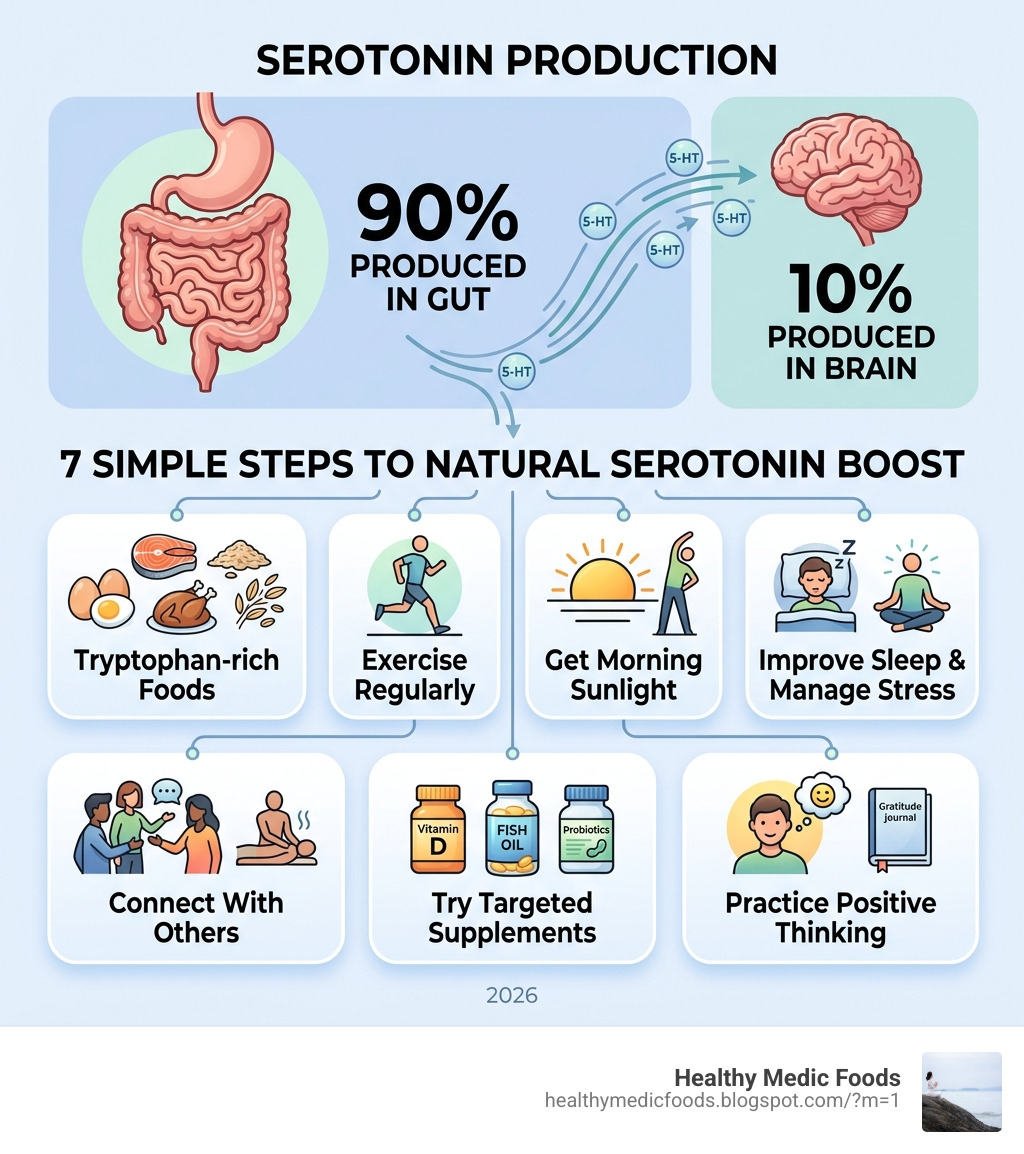
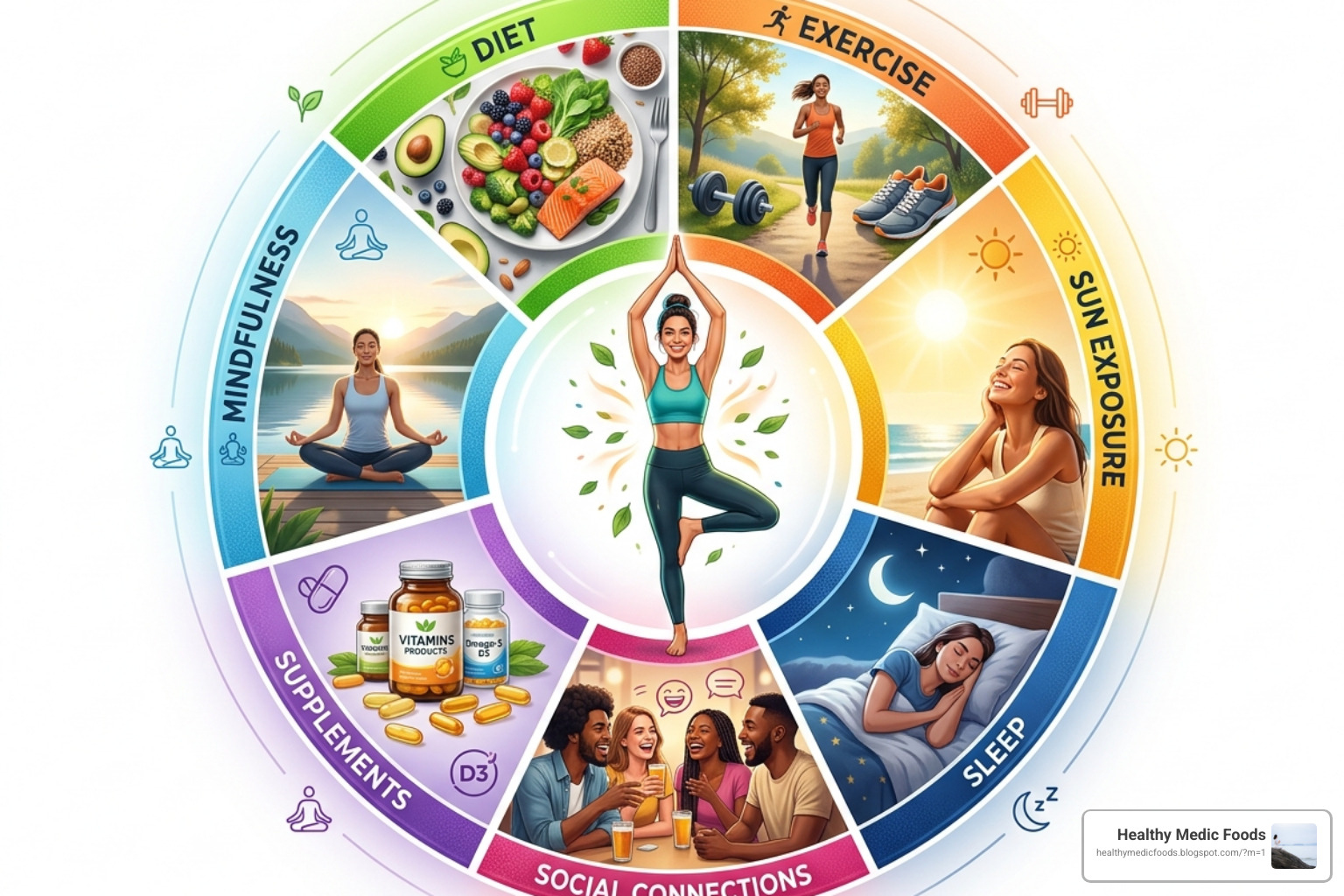
Here are 7 simple ways to boost serotonin naturally:
- Eat tryptophan-rich foods paired with complex carbs (eggs, salmon, turkey, oats)
- Exercise regularly — aim for 150 minutes of moderate activity per week
- Get morning sunlight — even 10-15 minutes makes a difference
- Improve your sleep and manage stress with breathing or mindfulness
- Connect with others — social interaction and massage both raise serotonin
- Try targeted supplements like vitamin D, fish oil, or probiotics (with a doctor's guidance)
- Practice positive thinking through gratitude journaling or visualization
Serotonin is a chemical messenger that affects your mood, digestion, sleep, and stress response. About 90% of it is produced in your gut — not your brain. That means your daily habits have a much bigger impact on how you feel than most people realize.
If you've been feeling persistently low, irritable, or just off, your serotonin levels could be part of the story. The good news? Science-backed lifestyle changes can meaningfully support your body's natural serotonin production — no complex routines required.
Below, we'll walk through 7 practical steps you can start using today.
Understanding Serotonin: The Body's Natural Mood Regulator
To effectively pursue a natural serotonin boost, we first need to understand what this "happy chemical" actually does. Scientifically known as 5-hydroxytryptamine (5-HT), serotonin is a monoamine neurotransmitter. While we often think of it as a brain chemical, research from the Cleveland Clinic reveals a surprising fact: about 90% of your serotonin is found in the cells lining your gastrointestinal (GI) tract. Only about 10% is produced in the brain.
In our bodies, serotonin wears many hats. It acts as a mood stabilizer, helping us feel focused, emotionally stable, and calm. Beyond mood, it is essential for:
- Digestion: It helps control your bowel movements and function.
- Sleep: It is a precursor to melatonin, the hormone that helps you sleep.
- Wound Healing: It is released by platelets to help heal wounds by causing tiny blood vessels to narrow.
- Bone Health: It plays a role in bone metabolism.
Signs of Low Serotonin
When our levels dip, the effects are often felt across the entire body. It’s not just about "feeling blue." Common signs of low serotonin include:
- Persistent sadness or anxiety: Feeling "flat" or constantly on edge.
- Sleep disturbances: Difficulty falling asleep or staying asleep.
- Sugar cravings: Your brain often craves simple carbs because they provide a temporary (but fleeting) natural serotonin boost.
- Digestive issues: Irritable bowel symptoms are often linked to serotonin imbalances in the gut.
- Increased pain sensitivity: Low levels can make chronic pain feel more intense.
As we navigate the wellness landscape of April 2026, we are seeing a massive shift toward "biological psychiatry" — the idea that we can support our mental health by understanding the physical chemistry of our bodies.
7 Steps for a Natural Serotonin Boost
Achieving a healthier mood isn't about one "magic pill." It's about lifestyle synergy. By combining small, sustainable habits, we create a foundation for our nervous system to thrive. Research published in PMC highlights that non-pharmacological interventions are not just "alternative" options — they are evidence-based strategies that can change brain chemistry.
Step 1: Optimize Your Diet for a Natural Serotonin Boost
You cannot "eat" serotonin directly to improve your mood because serotonin produced in the gut cannot cross the blood-brain barrier. However, you can eat the building blocks. The most important block is tryptophan, an essential amino acid that your body cannot make on its own.
The "Tryptophan Trick" is all about transport. Tryptophan has to compete with other amino acids to get into the brain. To give it an advantage, we pair tryptophan-rich foods with complex carbohydrates. The carbs trigger a release of insulin, which clears out the competing amino acids, leaving a "clear lane" for tryptophan to enter the brain and convert into serotonin.
| Food Item | Tryptophan Content (approx.) | Best Pairing for Absorption |
|---|---|---|
| Salmon | 330mg per 100g | Quinoa or Brown Rice |
| Large Egg | 167mg | Whole-grain Toast or Oats |
| Pumpkin Seeds | 576mg per 100g | An Apple or Berries |
| Turkey | 410mg per 100g | Sweet Potato |
We also recommend focusing on alpha-lactalbumin, a protein found in milk that is exceptionally high in tryptophan. Don't forget cofactors like Vitamin B6, folate, and magnesium, which act as "assistant builders" in the serotonin assembly line. Finally, support your gut microbiome with fermented foods like yogurt or kimchi to keep that 90% of serotonin production running smoothly.
Step 2: Move Your Body for a Natural Serotonin Boost
Exercise is one of the most documented ways to improve mood. According to Harvard Health, aerobic exercise increases the amount of tryptophan that enters your brain.
When you work out, your muscles use up branched-chain amino acids (BCAAs). Since BCAAs usually compete with tryptophan for entry into the brain, their removal via exercise allows more tryptophan to slip through the blood-brain barrier. This is a primary driver of the famous "runner's high."
To see results, we suggest:
- Consistency over intensity: 150 minutes of moderate activity (like brisk walking or swimming) per week is the "sweet spot" for mental health.
- Aerobic focus: Activities that get your heart rate up — like cycling or jogging — seem to have the strongest impact on serotonin.
- Neural Plasticity: Regular movement actually helps your brain grow new connections, making it more resilient to stress.
Step 3: Prioritize Bright Light Exposure
In our modern world, many of us are "light deprived." We spend 90% of our time indoors under artificial lighting that rarely exceeds 500 lux. In contrast, a bright summer day can offer 100,000 lux.
Research shows that serotonin production in the brain is directly related to the duration of bright light exposure. Even on a cloudy day, outdoor light is significantly brighter than indoor bulbs.
- The 15-Minute Rule: Aim for at least 10–15 minutes of direct morning sunlight. This "sets" your circadian rhythm and triggers serotonin production.
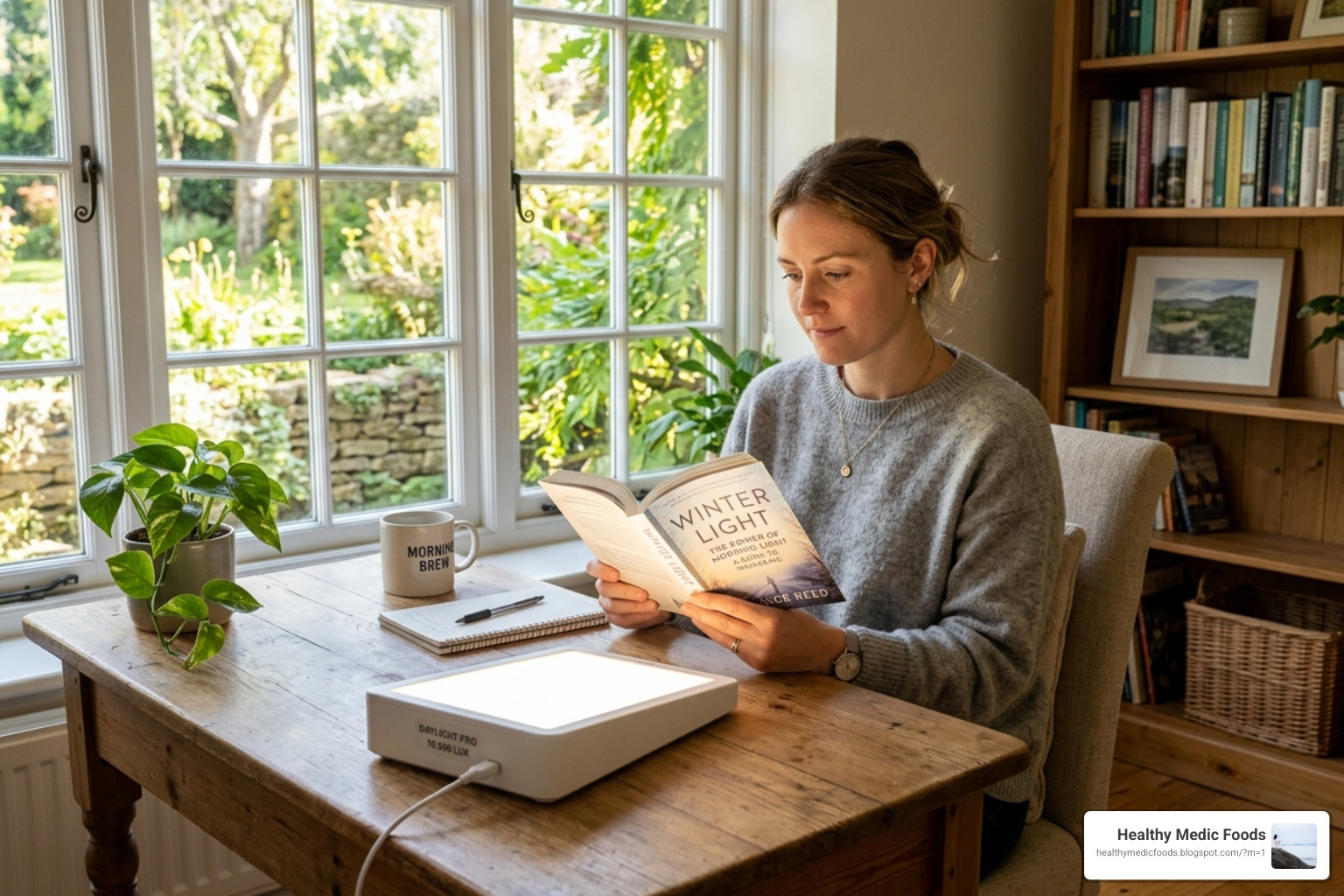
- Light Therapy: If you live in a northern climate or work in a windowless office, a 10,000 lux light therapy lamp can be a game-changer. Using one for 20–30 minutes in the morning can improve mood within just one to two weeks.
- Forest Therapy: Spending time in nature doesn't just feel good; studies show it significantly increases serotonin levels compared to urban walking.
Step 4: Master Sleep Hygiene and Stress Management
Stress is a notorious serotonin killer. When we are chronically stressed, our bodies pump out cortisol. High cortisol levels can actually interfere with the way our brain uses serotonin.
To protect your levels, we must focus on the "Serotonin-Melatonin Conversion." During the day, sunlight helps us build serotonin. At night, in the absence of light, our brain converts that serotonin into melatonin to help us sleep. If you don't have enough serotonin, you won't have enough melatonin.
- Keep it Cool: Set your bedroom temperature to 65–68°F for optimal deep sleep.
- Parasympathetic Activation: Use deep breathing or yoga before bed to tell your nervous system it is safe to "rest and digest."
- Screen-Free Routines: Blue light from phones mimics sunlight, tricking your brain into keeping serotonin high and melatonin low, which ruins your sleep cycle.
Step 5: Foster Social Connection and Physical Touch
Humans are social animals, and our neurochemistry reflects that. Positive social interactions trigger the release of oxytocin, which in turn supports serotonin levels.
One of the most effective physical ways to get a natural serotonin boost is through massage therapy. Research indicates that just 20 minutes of massage can increase serotonin and dopamine levels while significantly lowering cortisol.
- The Power of Giving: Interestingly, giving support to others often boosts our mood more than receiving it.
- Laughter: It truly is "good medicine." Laughter lowers stress hormones and increases feel-good neurotransmitters.
- Pets: Spending time with animals provides companionship and physical touch that stabilizes the nervous system.
Step 6: Consider Targeted Supplementation
While we always advocate for a "food first" approach, sometimes our bodies need a little extra help. However, supplements are not regulated by the FDA in the same way medications are, so we must be cautious. Always look for third-party testing (like USP or NSF) to ensure quality.
Commonly researched supplements for serotonin support include:
- 5-HTP: A direct precursor to serotonin.
- SAMe: A compound naturally found in the body that helps produce and regulate hormones.
- St. John’s Wort: Often used for mild depression, but it can interact with many medications.
- Probiotics: Specifically strains that support the gut-brain axis.
- Vitamin D: Known as the "sunshine vitamin," it is essential for the enzyme that converts tryptophan into serotonin.
Note: Always consult your healthcare provider before starting supplements, especially if you are already taking antidepressants.
Step 7: Practice Mood Induction and Mindfulness
Did you know you can "think" your way to a natural serotonin boost? Research from 2007 (and still relevant in April 2026) suggests that self-induced mood changes can influence serotonin synthesis. This is known as mood induction.
When you focus on a happy memory or visualize a positive future, your brain activates the same pathways as if those events were happening.
- Gratitude Journaling: Writing down three things you are grateful for each day forces your brain to scan for the positive, reinforcing serotonergic pathways.
- Reducing Rumination: Mindfulness helps us "catch" negative thoughts before they spiral, preventing the stress response that depletes our chemical reserves.
- Purpose-Driven Activities: Engaging in work or hobbies that feel meaningful provides a steady, long-term support for your emotional well-being.
When to Seek Medical Intervention and Safety Risks
While these natural steps are incredibly powerful, they are not a replacement for professional medical care when it’s needed. If your low mood is affecting your ability to work, maintain relationships, or care for yourself, please reach out to a professional.
It is also vital to be aware of Serotonin Syndrome. This is a potentially life-threatening condition that occurs when there is too much serotonin in the body. This usually happens when people combine multiple boosters — such as taking a prescription SSRI (like Prozac or Zoloft) along with supplements like St. John's Wort or 5-HTP.
Symptoms of Serotonin Syndrome include:
- Agitation or restlessness
- High body temperature and shivering
- Rapid heart rate
- Hallucinations
- Loss of muscle coordination
If you have Bipolar Disorder, be particularly careful with light therapy and certain supplements, as they can occasionally trigger manic episodes. For more guidance on navigating these lifestyle changes safely, you can explore our resources at Healthy Medic Foods.
Frequently Asked Questions about Serotonin
How can I raise my serotonin levels quickly?
While long-term stability comes from habits, you can get a quick "spike" by:
- Stepping into bright morning sunlight for 15 minutes.
- Doing 20 minutes of vigorous aerobic activity (like a quick bike ride).
- Eating a small snack that pairs a tryptophan source with a carb (like a banana with a few almonds).
- Practicing 5 minutes of deep, rhythmic breathing.
What depletes serotonin the most?
The "Big Five" serotonin depleters are:
- Chronic Stress: Constant cortisol release wears down your system.
- Lack of Sleep: This breaks the serotonin-melatonin cycle.
- Excessive Alcohol: Alcohol provides a temporary boost but leads to a major "crash" and long-term depletion.
- Poor Diet: Diets high in processed sugars and low in protein/fiber starve the gut-brain axis.
- Lack of Sunlight: Staying indoors leads to "winter blues," even in the summer.
Does gut health really affect my mood?
Absolutely. With 95% of your body's serotonin produced in the gut, your microbiome is essentially a "second brain." The vagus nerve acts as a super-highway, sending signals from your gut to your head. If your gut is inflamed or imbalanced, your mood will likely follow suit.
Conclusion
At Healthy Medic Foods, we believe that mental wellness should be accessible and practical. As we look at the health standards of April 2026, it is clearer than ever that our daily choices — what we eat, how we move, and how we connect — are the most powerful tools we have for a natural serotonin boost.
You don't have to change everything at once. Start with one step: perhaps a 15-minute morning walk or adding pumpkin seeds to your lunch. These small, sustainable shifts create a ripple effect that leads to a calmer, happier, and more focused life.
For more proven, practical tips on living a calmer life through nutrition and wellness, Visit Healthy Medic Foods for more tips.



0 Comments